

It was the last chance I would ever have.
Well, it was technically the first chance I would ever have, too. Four years of college had gone by, and I’d never been able to summon the courage to see if I had what it took to join the greats.
I’m talking about Northwestern A Cappella, of course.
Where teams have their own Wikipedia pages and formed the basis for the Pitch Perfect movies (yes, really). This is not a casual hobby… it’s a religion with harmonies.
So, thinking I had a chance to make a team with zero singing experience (sans my Bar Mitzvah + shower time), zero voice lessons, and zero “ins” could hardly be described as anything less than delusional. And yet, some combination of lifelong Jewish motherly praise for my voice and a refusal to graduate with regrets willed me to the audition on a rainy Evanston afternoon.
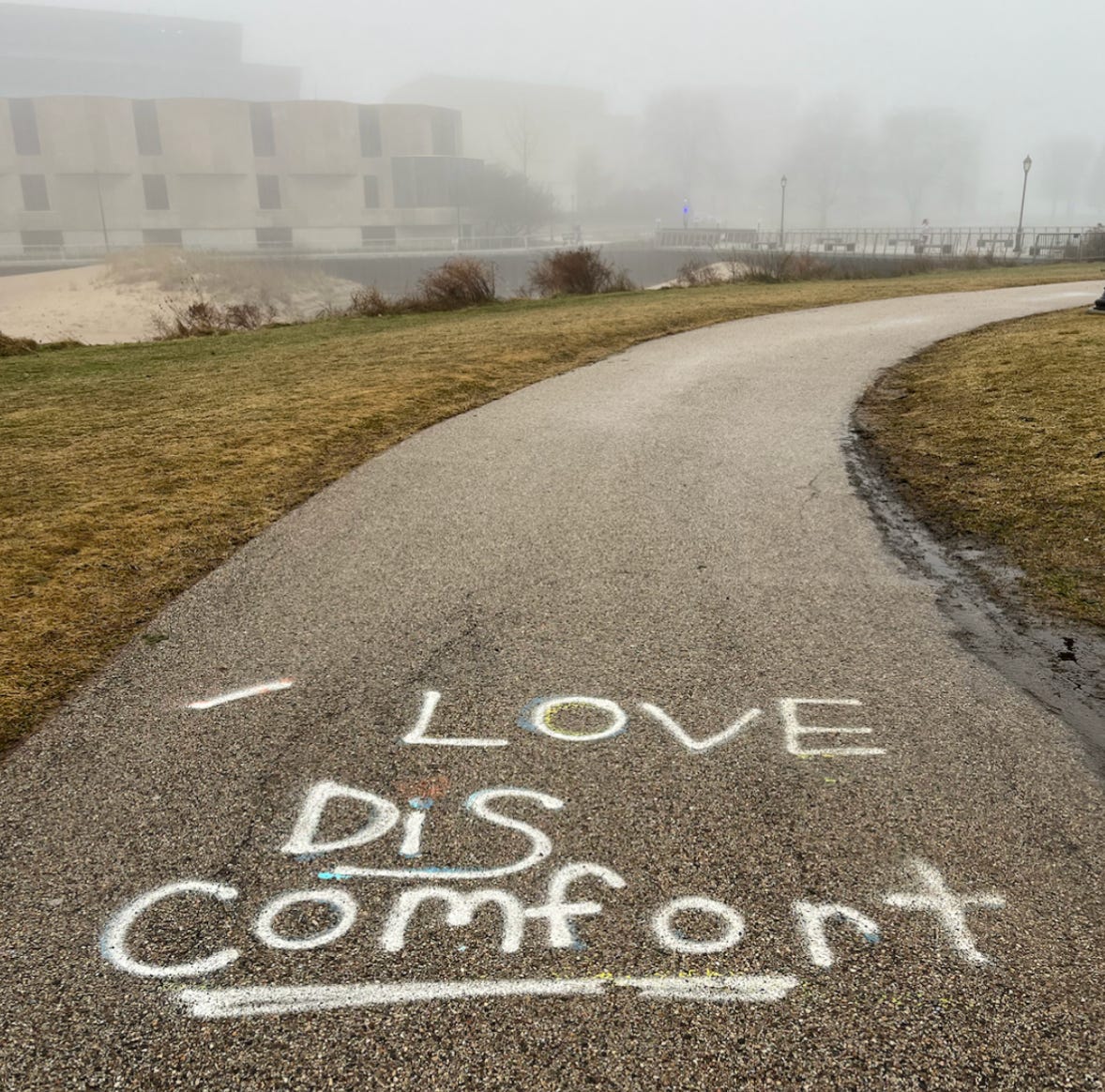
I’ll spare you (& myself) the details of what went down in that audition room. If you want my audition recording, please email my assistant. (I do not have an assistant.)
To sum it up, I learned what a vocal range test was on the spot, and my voice cracked twice during my all-too-brief rendition of “Too Sweet” by Hozier.
I didn’t make the team.
Of course, I didn’t expect to, and so I felt totally satisfied by putting myself out there in a wildly uncomfortable way. This was part of an emerging ethos: a try-everything, always-say-yes mentality formed from listening to too many podcasts. It was also driven by a real regret as I finished college: that I hadn’t tried enough things. That I didn’t try more performing arts, more IM sports, more quirky clubs, more everything.
My excuse is probably a valid one: I spent the better part of my college years building a company called The Neuron, a media startup in the AI space. It was exhilarating, rewarding, and utterly exhausting. Not due to the actual hours worked, but because I was thinking about The Neuron all day long (& in my dreams, too). Obsessing over small details, brainstorming growth outlets, and quietly praying the ground wouldn’t collapse underneath us.
Through a combination of luck, grit, and timing, we became a real player: 500,000+ daily readers, a top podcast, and 7-figures in revenue by year two.
Then I sold it.
When we got acquired, the biggest emotion I felt was not happiness, pride, or exhilaration (those were all there), but relief. Not a bad relief—the kind where you go zip-lining and make it to the other side. A “holy shit, we actually did it, and now it’s over” kind of relief.
So I found myself in the strange and fortunate position of graduating from college and not needing to scramble for a job. The slate was wiped clean, and the world was my oyster (apologies to my kosher ancestors).
The question I started getting, quite literally days after the sale, was, “So, what’s next?” My first answer—sleep, read, enjoy life—was clearly a cop-out. I had no fcking idea what I wanted to do, and no fcking idea how I was going to figure it out.
I’d spent two and a half years doing one thing obsessively, and somewhere in all of that, I’d completely lost track of what I actually liked outside of it. What energized me. What I’d do on a random Tuesday if nobody was watching and nothing was at stake.
Because I tend to be impulsive, I was not going to jump into something new immediately. Instead, as I did with a cappella, I started trying things to see what I wanted life to look like.
A quick note before I continue: what I’m about to describe—a year of trying things with no real pressure to take a job or make money—is a pretty unusual and fortunate situation. I’m aware of that. I also worked hard to get here: writing a daily newsletter that took 3-4 hours each evening, on top of helping run the company and juggling a full course load. It was a trade, and I want to be honest about both sides, because everything that follows only makes sense with that context.
First side quest: Asia.
Asia was two trips disguised as one.
The first half was exactly what it sounds like: backpacking around Southeast Asia with four friends, eating everything, sleeping nowhere good, doing absolutely nothing of consequence. The kind of trip where the biggest decision you make is whether to get pad thai or fried rice.
(Both. Always both.)
It was incredibly fun, and it was the first time in probably four years that I really let myself decompress. No commitments, no timelines, no schedules. Just a full surrender to however things unfolded.
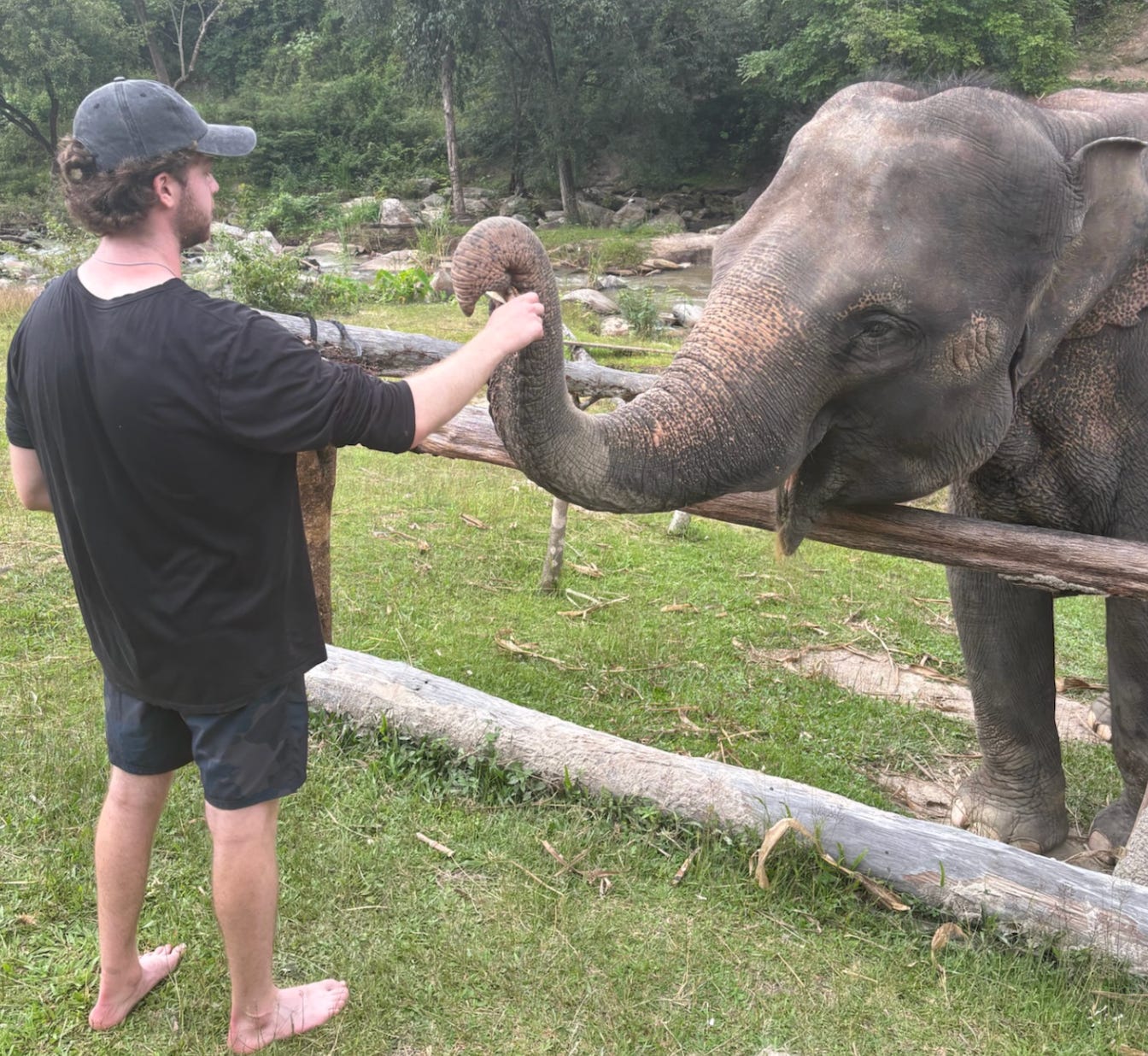
Which sounds nice, and it was. But it was also weirdly hard at times. When you’ve spent two and a half years with your brain locked onto one thing, “just relax” doesn’t come naturally. There’s this low hum in the background: shouldn’t I be doing something? Shouldn’t I be working toward something? What am I going back to? Learning to let it hum without acting on it was its own kind of challenge.
Still incredibly fun though, that’s for sure.
The second half was different.
After a week and a half in Japan with a different friend, I spent two weeks in Nepal at a Buddhist monastery in Kathmandu. Now, this wasn’t some eat-pray-love revelation or a tech-bro-discovers-meditation cliché.
I’d sat in monasteries before and was coming in with close to ten years of a near-daily meditation practice across both Tibetan and more secular practices. But this was the first time I’d fully committed to something like this. Two weeks, mostly silence, completely offline.
The day before the retreat started, they ran us through the rules. No substances. No sex. No being loud. Should be easy, I thought… they just described the first eighteen years of my life!
I’ll save the actual content of the retreat for another time, but the experience was revealing in ways I didn’t expect. There were things I loved. I felt a genuine spiritual connection. The small group discussions where we’d dig into Buddhism, philosophy, and meditation practice lit me up. I felt more energized in those conversations than I had in months.
But I also noticed what didn’t fit.
The strict formality of everything. The rigidity of the tradition. The fact that I lost about seven pounds in two weeks because there was essentially no protein in the all-vegetarian food. I never imagined the sight of tofu in a kitchen would make me so happy.
It was a weird mix of feeling deeply nourished in one way and slowly deteriorating in another.
Part of me had also gone in with a quiet hope that maybe this would give me answers. Two weeks of near-silence and deep meditation. Surely something would click, right? Some clear vision of what to do next?
Spoiler alert: it didn’t.
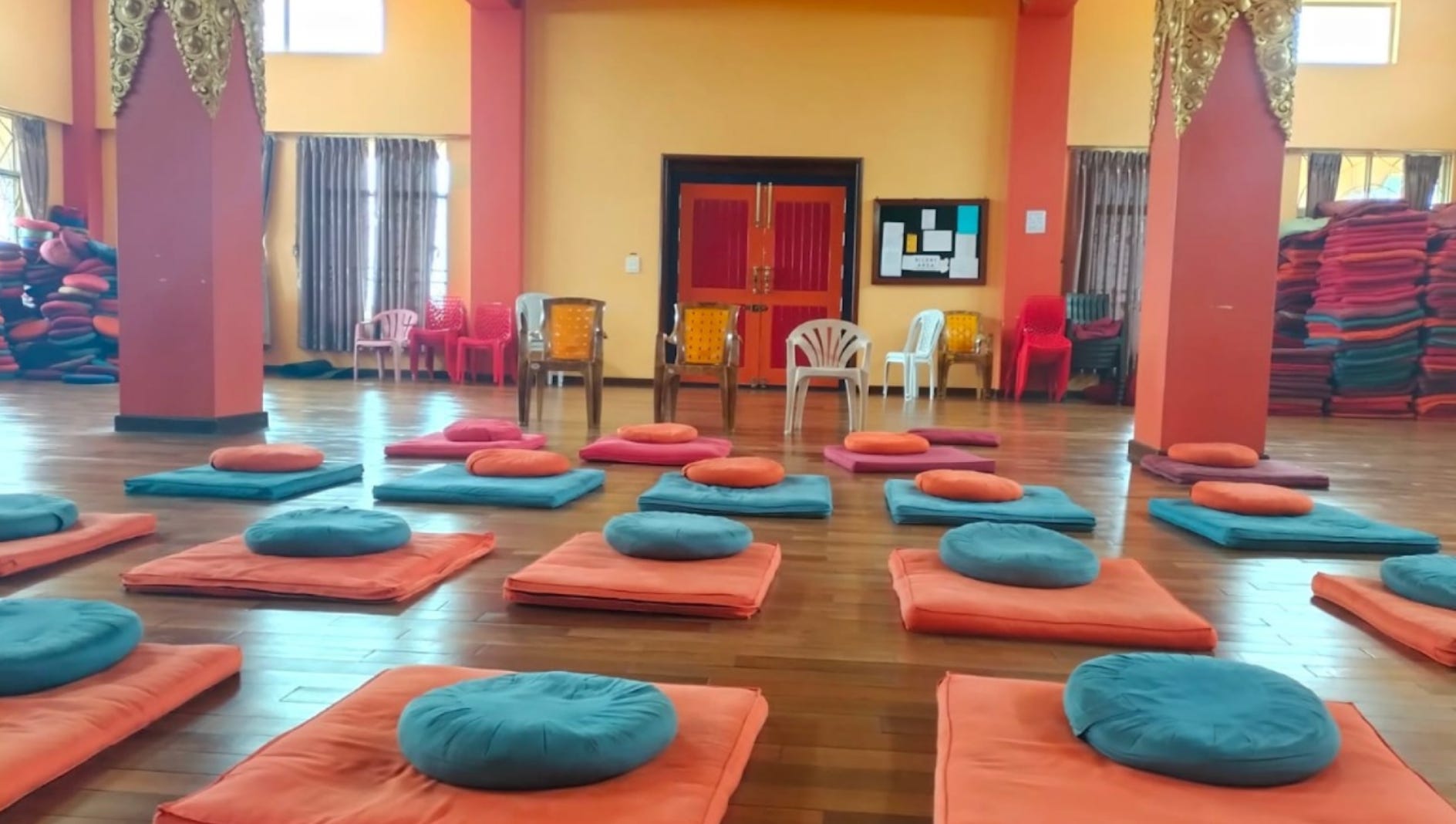
But something subtler happened. My meditation practice had already been doing this in the year before the retreat, but the extended silence accelerated it. I started seeing through some of my own conditioning. When I’d sit with the question “what do I want to do next?”, the answers that came up first were always the conventional ones:
Start another media company. Join a VC fund in AI. Go to graduate school to study psych.
Not that any of those are wrong, necessarily, but I started noticing that most of them weren’t really mine.
They were rooted in what other people might expect from me, what looked impressive, what made for a clean narrative, what a 23-year-old who just sold a startup is “supposed” to do next. None of them were coming from some natural, internal pull.
They were echoes of conditioning dressed up as ambition.
And so, neither the backpacking nor the monastery gave me an answer. But they gave me something more useful: space to question. Enough quiet to start hearing which thoughts were mine and which ones I’d inherited.
Carl Jung said, “Until you make the unconscious conscious, it will direct your life, and you will call it fate.”
I returned to the US with 0/2 of the pairs of shoes I had left with, a buzz cut (sorry Mom), and still absolutely no fcking idea what I wanted to do next.
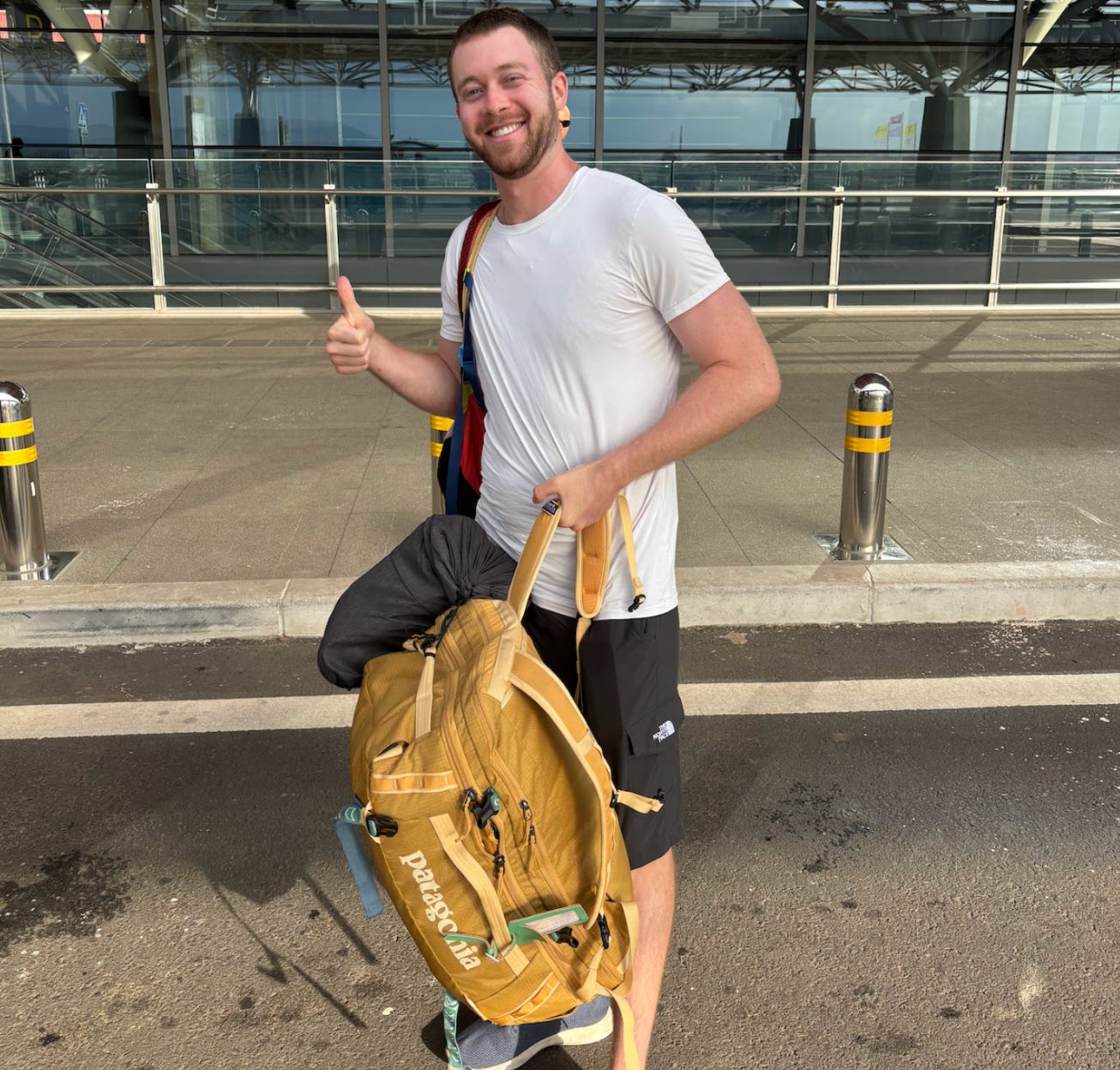
When people asked me “what’s next?”, my answer mostly became “IDK” to move the conversation along.
I wasn’t as clueless as I was letting on, though. With an imminent move to Chicago, my plan was to actually go find the things that lit me up. All the things I didn’t have the time or energy to try in college. Not some intellectual exercise about what I “thought” I should do, or what others expected of me, but the stuff I’d do for free, for fun, and forever.
This wasn’t the first time I’d done something like this, either. Before college, I took a gap year. Left my environment, my friend group, everything familiar. It was one of the most formative experiences of my life. Something about being pulled out of your normal context forces you to figure out who you actually are, or who you actually are not.
So I had evidence that wiping the slate clean works. It worked at 18. I was betting it would work at 23.
I landed in Chicago in September and looked at my calendar. Completely empty, save for a visit to the Chicago DMV to get a new ID (don’t recommend).
Some people in my life have told me a totally open schedule would stress them out. No structure, no obligations, no idea what you’re doing from the moment you wake up. But for me, at least in the beginning, it felt like a blank canvas.
The plan, if you could call it one, was simple: try a lot of things. Pay attention to how they make me feel. And resist the urge to think my way to an answer when I could just go do things and see what happened.
So I did.
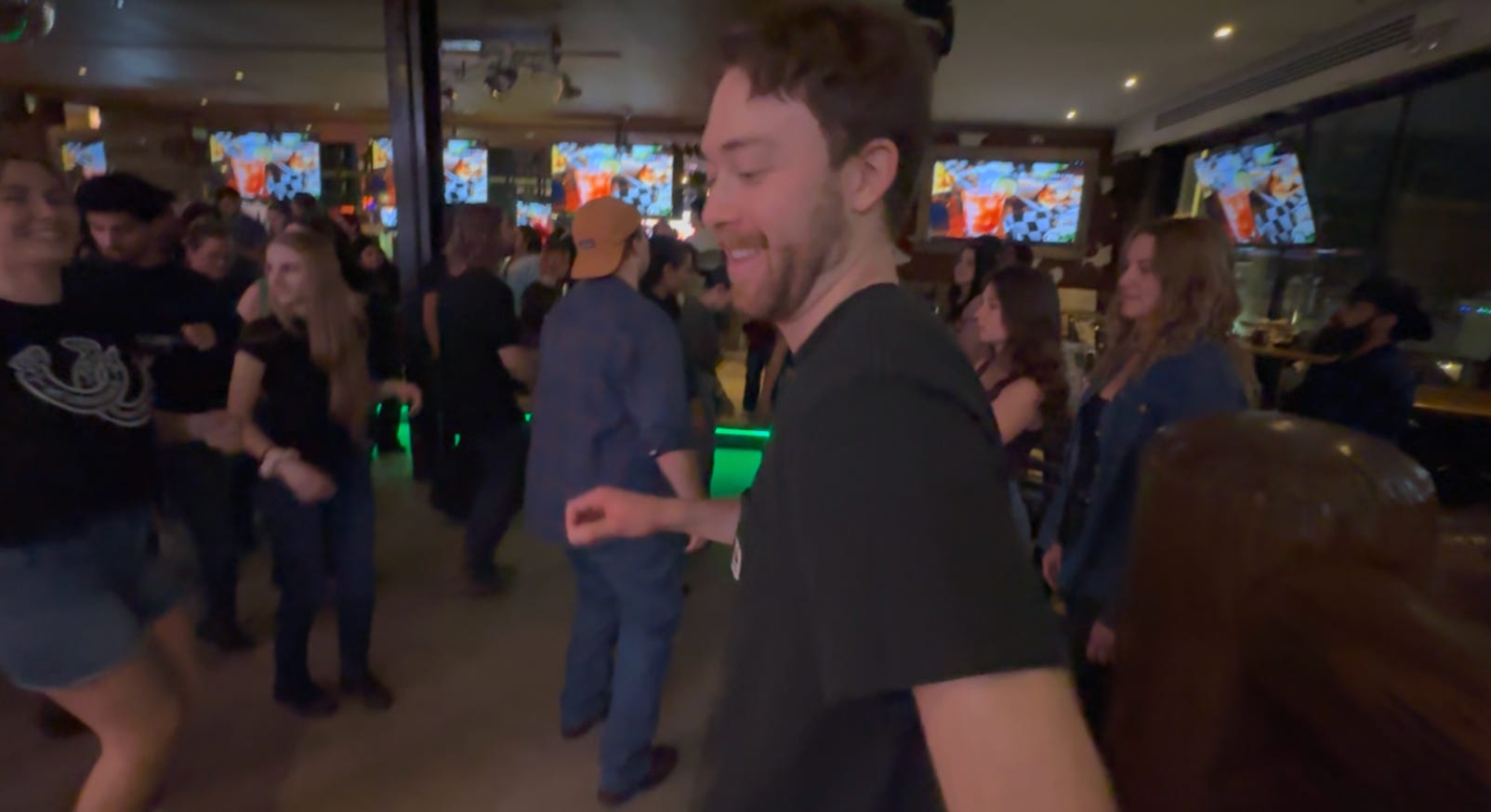
Over the next six months I tried stand-up comedy, taught meditation, started a men’s group, took salsa and line dancing classes, traveled to Panama, Argentina, and around the U.S., went on meditation and breathwork retreats, did a few mini consulting projects, made some angel investments, taught a pickleball series, attempted to vibe code, spent entire days just reading, tried waking up at the crack of dawn and also staying out until 3 AM, jumped in Lake Michigan for no reason, co-worked downtown, and visited more coffee shops than any human reasonably should.
Some of it was great. Some of it was terrible. Almost all of it taught me something.
One of my first weeks in the city, I noticed I lived right next to Second City and saw an ad: “DO IT FOR THE BIT. TAKE A CLASS TODAY!”
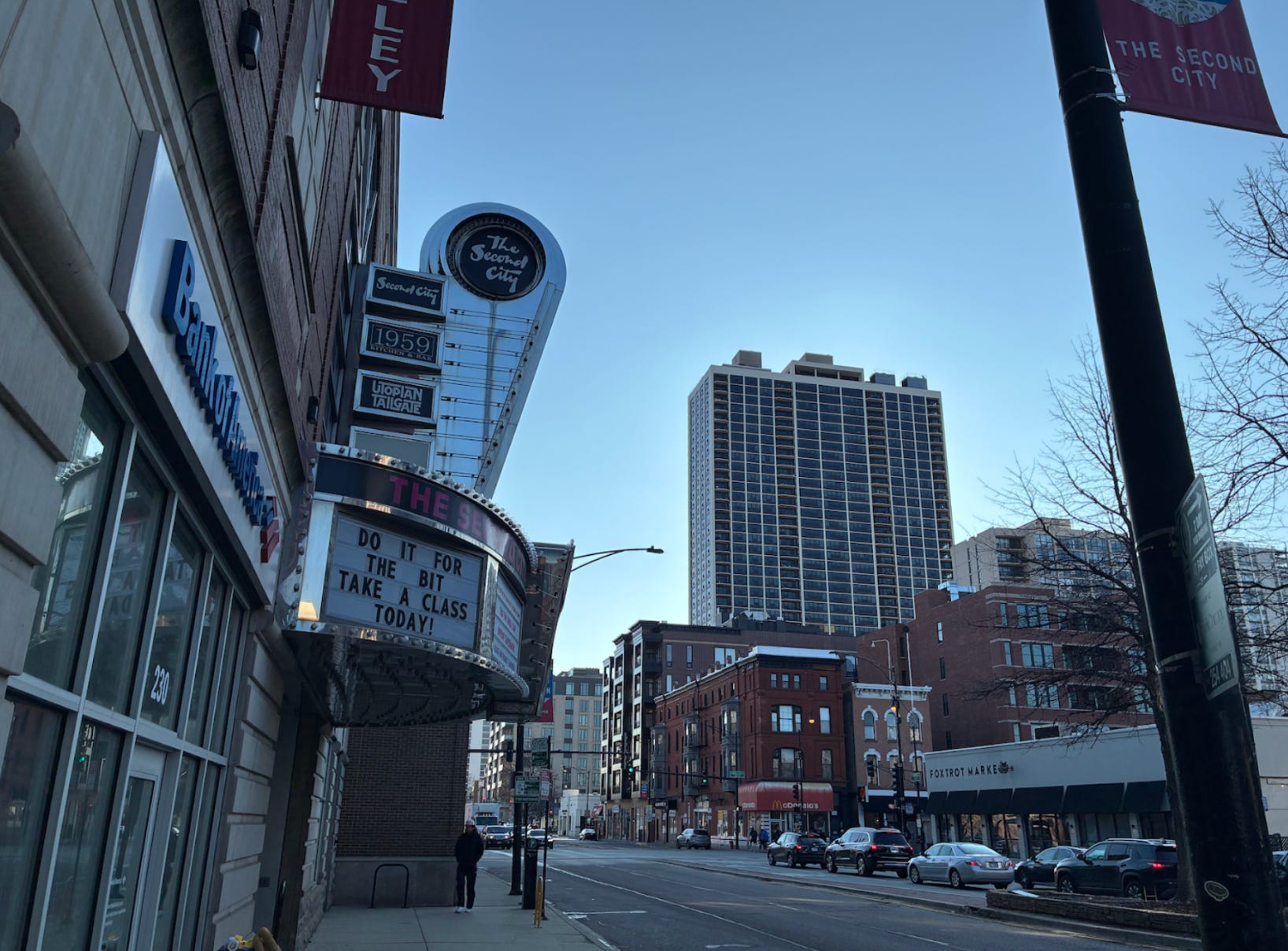
Since I’m always down for the bit, I signed up for a seven-week stand-up comedy course.
Every week, I built a new five-minute set from scratch. My favorite routine was poking fun at the bathroom situation on airplanes (uhhh, how do you lock the door with no light?).
And this routine… absolutely bombed.
But I loved the creative process. Finding connections, observational humor, and figuring out whether something was actually funny or just funny to me. I’m a big Curb Your Enthusiasm fan, and this scratched a similar itch.
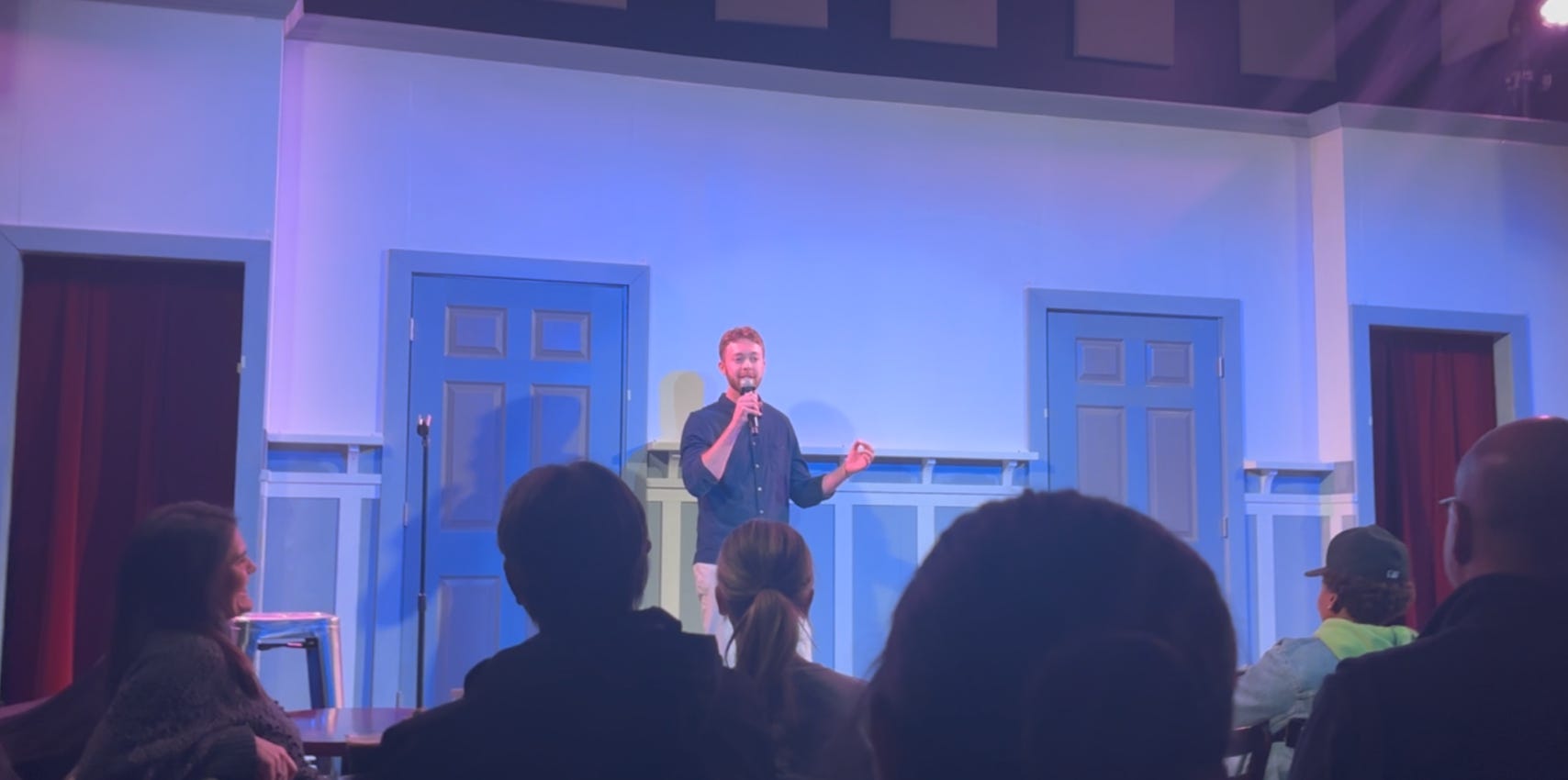
Crafting something from nothing that makes people laugh is a very specific kind of high.
When I was honest with myself, though, I didn’t feel excited walking into the classes each week. I loved comedy. I loved watching it. I wasn’t sure I loved the solo grind of writing it. And I probably didn’t have the raw talent to take it much further.
Stand-up taught me something about what I liked. Travel taught me something about how I wanted to live.
Even after settling in Chicago in September, I was still very much a nomad. I went to Panama, Argentina, San Francisco, Austin, and NYC a few times.
It was fun. But I started noticing something toward the end of every trip: I was ready to come home. Which told me something simple but useful. I like having a home base. My own space to return to. The nomadic life is great in doses, not as a default.
The more interesting part of travel was the perspective shifts. In Panama, I spent a few days solo in Panama City before heading to a surf town called Playa Venao.
What struck me was how people at hostels answer the question “What are you up to in life?” There’s no nervous energy. No over-explaining. Just: “I don’t know, I’m traveling, I’m enjoying life.” That’s it.
It’s a perspective you don’t really encounter in the US, where “what do you do?” is basically code for “what are you worth?”
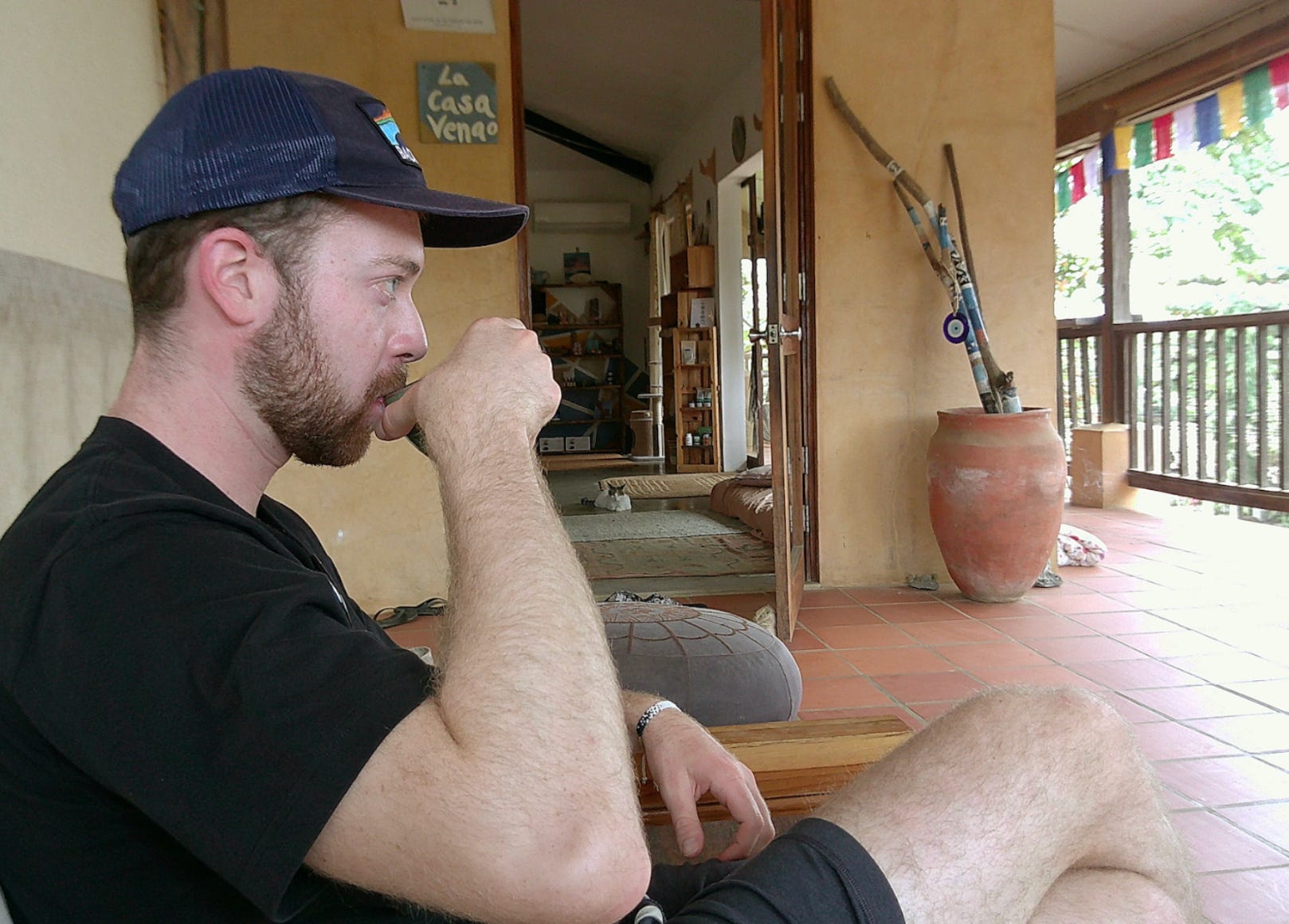
Another experiment was less glamorous but maybe more revealing: I just read. Like, a lot.
Some days I’d spend the whole day with books and podcasts about meditation, philosophy, AI, consciousness, and startups. Whatever I was drawn to. No agenda.
This sounds luxurious, and it was. But it was also confusing in a way I didn’t expect. Giving myself permission to just sit, think, and learn without producing anything felt almost wrong. Like I was cheating at life. There’s this voice that says you should be building something, going somewhere, earning something. And spending a Thursday afternoon reading Walter Isaacson's biographies in your apartment doesn’t check any of those boxes.
I also kept catching myself doing the thing I was trying not to do: thinking my way through it. I’d finish an experiment and immediately start analyzing whether it could be a career instead of just noticing whether I enjoyed it. I had to keep reminding myself: just pay attention to how it feels.
That’s it.
Stop turning everything into a spreadsheet.
And while this lifestyle is luxurious on the surface, it didn’t always feel that way in my head. There were mornings when I’d wake up and the openness that once felt like a blank canvas now felt like a void. I’d lie there, and the thoughts would spiral.
I’m 23. I’m not working. I don’t have a project. I don’t even have a real answer when someone asks what I do.
Some days, it was a quiet unease. Other days, it was a full-on existential panic.
I remember one night in particular. I was walking home from the movie theatre alone when a wave of unworthiness washed over me. My body felt heavy, my chest felt tight, and my mind felt lost. I remember thinking, very clearly: I am wasting my time on this Earth. I am wasting the best years of my life. I walked home fast, got into bed, and just laid there.
That’s the part nobody talks about when they romanticize “taking time to find yourself.” Some nights you’re not finding anything. You’re just completely, totally lost.
My meditation practice helped, actually.
Being able to sit with the panic instead of immediately reacting to it, to watch the thoughts spin without believing every one of them (like I did in Nepal). But even with a decade of practice, some days just sucked. Days where no amount of mindfulness made “I have no idea what I’m doing with my life” feel okay.
And sometimes, I’d catch it.
I’d ask myself: whose timeline am I comparing myself to? Whose definition of productive? Why does “not working at 23” feel like failure? Most of the time, when I actually sat with those feelings, they’d start to dissolve. They weren’t insights; they were just old conditioning. Stories I’d absorbed about what a life is supposed to look like at this age.
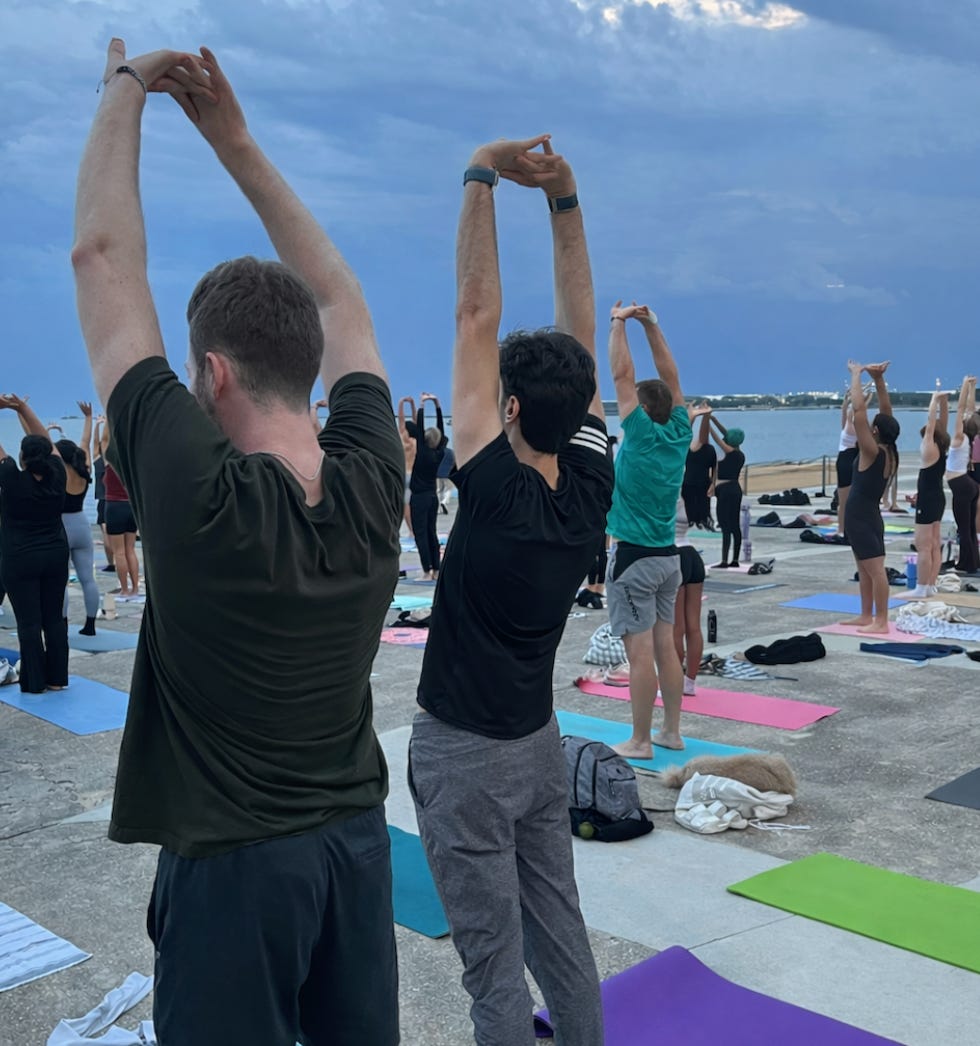
Right around the same time as my periodic existential meltdowns, I found energy in a place I didn’t expect: teaching and community.
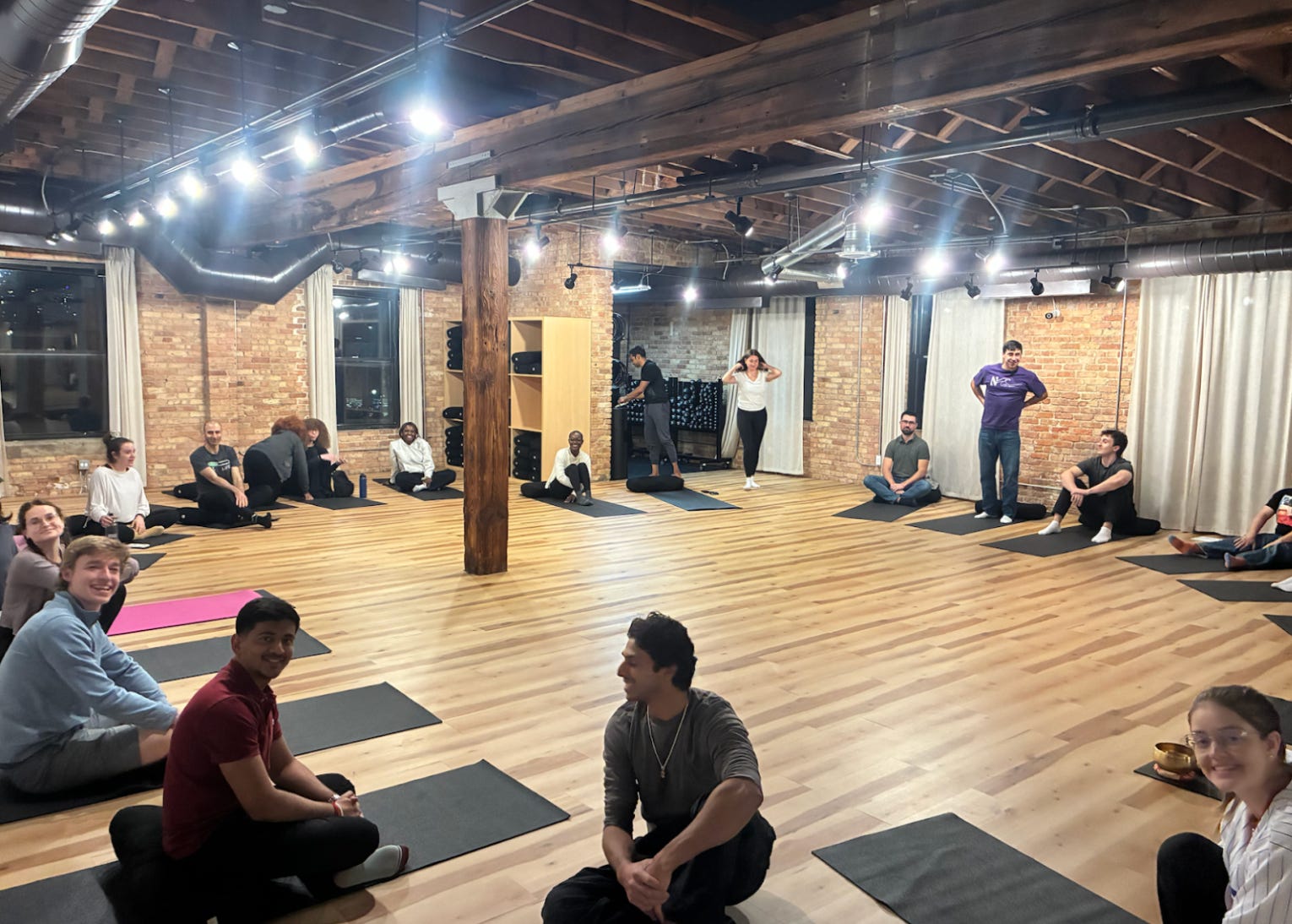
I started leading free meditation classes around Chicago. I also started a men’s group where I’d facilitate conversations about the kind of stuff most guys never talk about. Vulnerability, masculinity, purpose. The things that actually matter but feel too uncomfortable to bring up over beers.
The energy I felt (and continue to feel) leading up to those sessions was unavoidable: I was genuinely, almost childishly excited. In one men’s group session, I led an inner child meditation. We visualized ourselves as kids who needed support or wisdom, and then practiced radiating compassion to that child.
People loved it, and I remember feeling an overwhelming sense of love, meaning, and peace afterwards. Not in some abstract spiritual way, but physically in my chest, in my hands, in my whole body.
I felt whole.
And that told me something that no amount of reading, thinking, or podcast listening ever could. This is what it feels like when you’re doing the thing you’re supposed to be doing. When the work isn’t work. When you’d do it for free, for fun, and forever.
Not everything was so illuminating…
Over the last few months, I did a few advisory stints and mini internships with startups. Growth strategy, content advising, and the types of things I was good at from building The Neuron. I realized pretty quickly that I didn’t love it. Unless I cared about the thing immensely, doing ops work for someone else’s vision just didn’t move me. I also just really didn’t enjoy working for other people.
I’m basically unhireable, which sounds like a problem but was actually one of the clearest signals I got all year.
I made a few angel investments, too. Fun to be on the other side of the table. But it confirmed what I suspected: watching from the sidelines isn’t the same as building. Whatever comes next has to be my project.
So, where does all of this leave me?
I don’t have a startup, a job title, or a clean answer to “what’s next?” I still sometimes don’t know what I’m doing next month, tomorrow, or an hour from now.
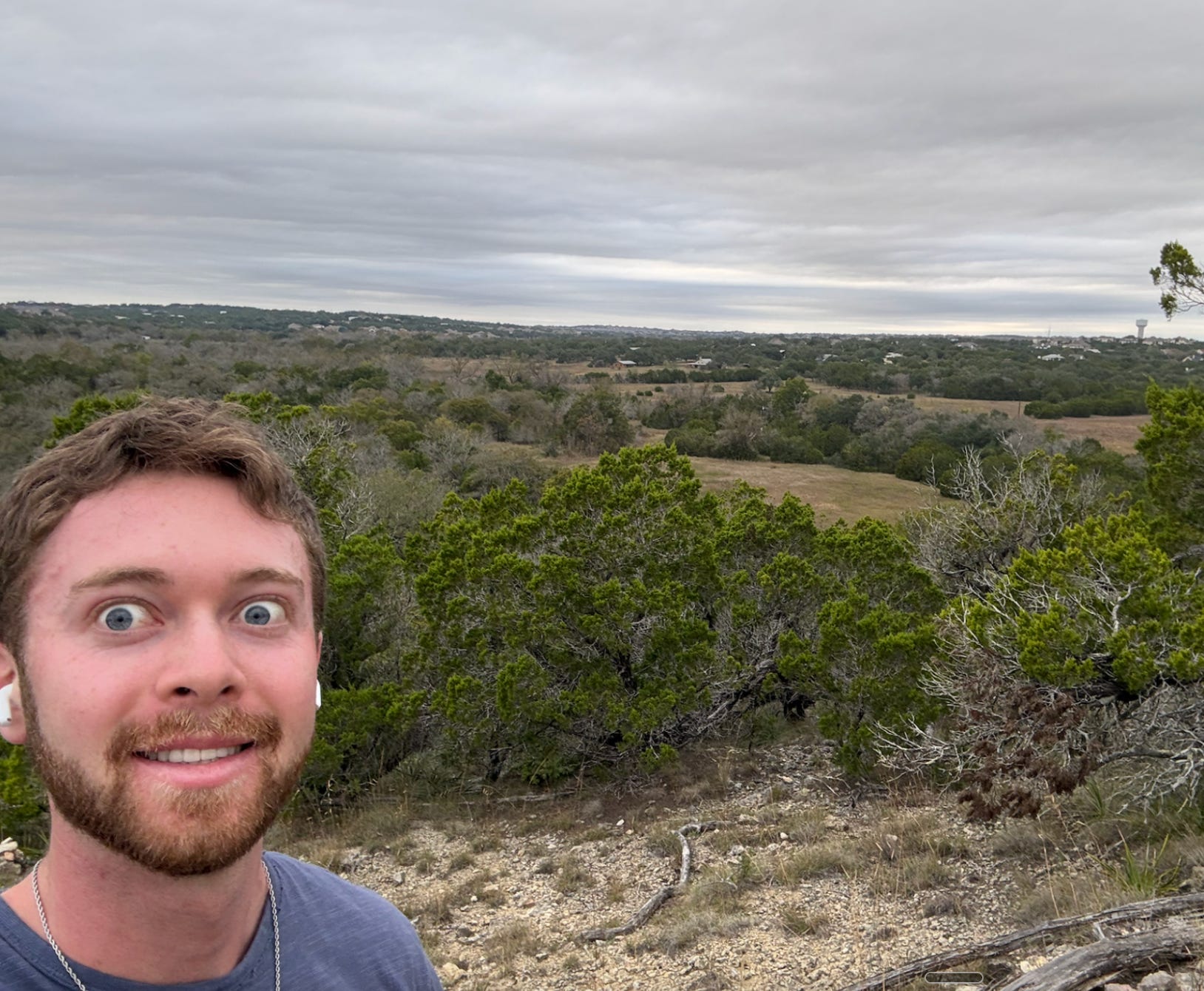
But I have far more clarity about what actually lights me up: teaching, learning, writing, building something of my own, community, and stepping outside my comfort zone (as long as it doesn’t involve singing or dancing).
I also have a gut check for any potential commitments going forward. Does this give me energy or drain it? Would I do this for free? Do I think about it before I fall asleep? Do I feel like myself doing it?
One thing that keeps passing that test is writing. Funnily enough, writing is where my “career” began nearly eight years ago, when I published my first article online. It’s where thinking, learning, teaching, and creativity all meet for me. The kind of thing I’d do for fun, for free, and forever. What you’re reading right now is the result of a year of experiments.
It’s also an experiment in itself. I’m playing with different formats, styles, and topics to figure out what I actually enjoy writing about.
And with this criterion, I’m starting to think more seriously about the next business I want to build. Probably something in the mental wellness space, blending my interest in spirituality, teaching, and entrepreneurship.
I know I’ve been lucky.
I’m not saying that in some preachy way, but to ground everything I just wrote. The acquisition of The Neuron gave me a forcing function to really try to understand myself and my place in the world. When something lit me up, the signal was clean. When it didn’t, there was nowhere to hide.
But I think the broader point holds: we jump into things way too quickly. Careers, commitments, identities. The pressure to just pick something, especially in your twenties, is enormous. From family, friends, society, and yourself. I’m not immune to it. But I’m trying to resist it a little longer.
Because there’s something to be said for wiping the slate clean. Stripping away the expectations, the conditioning, the “shoulds,” and building back up by being honest about what you love. Even if you can’t take a full year to do it, even in smaller ways: before you commit years of your life to something, spend some real time figuring out if you actually want it.
Not what you think you should want.
What you actually want.
I still don’t know what’s next. But I know what I love. And it turns out that’s most of the answer.
P.S. Thanks so much for reading. If you liked this, definitely subscribe as I’ll be writing more pieces like it. I’d love to hear what you loved, what you hated, or what stuck with you after reading.
And if you disagreed with any of it, tell me. I mean that. The honest reactions are way more useful than the nice ones. That’s how the writing gets better :)
I think you’d like this if you haven’t heard of it already…but seems you’re already practicing the lesson it’s trying to teach: https://www.rejectiontherapy.com/100-days-of-rejection-therapy/
hey man really enjoyed reading this, much of it very relatable (even if I didn't scale and sell my own business!). would love to catch up, send me a text next time you're in New York