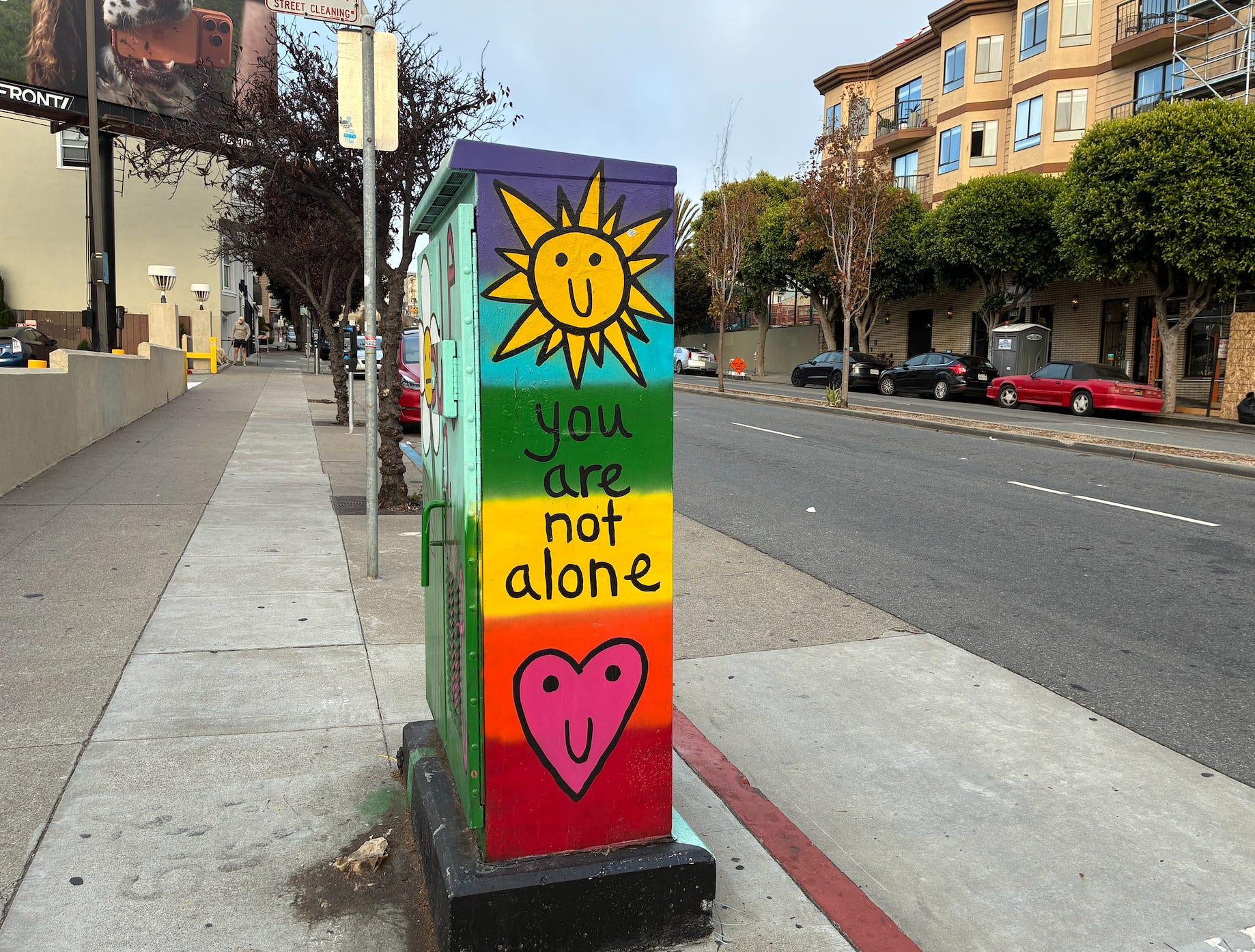
“We thought of life by analogy with a journey, a pilgrimage, which had a serious purpose at the end... But we missed the point the whole way along. It was a musical thing and you were supposed to sing or to dance while the music was being played.”
— Alan Watts
I should have listened to my Mom. Or my Dad.
Famous last words, right?
I should have planned better. Who knew it would be so hard to lug all my possessions across the country a mere five days after deciding my move to San Francisco was official… except, well, literally every person ever.
So there I was at Chicago’s infamous O’Hare, five suitcases deep, a layover through Las Vegas, and a slight regret about not planning better. Case in point: I got to the United bag-check counter only to find out one of my suitcases (actually my buddy’s… because I didn’t own enough suitcases… because I didn’t plan well) was 26 pounds overweight.
TWENTY SIX POUNDS.
I had to move an Australian Shepherd’s worth of t-shirts and jeans into another bag that was already full, in the middle of the airport, on a Tuesday morning. Clothes all over the floor. Well-behaved travelers side-eyeing me. A United employee quietly cursing my future children.
And as the first drops of nervous sweat ran down my back (boarding time creeping closer… again, because I didn’t plan well), a familiar voice slid into my head:
SURRENDER.
So instead of panicking, I laughed. Out loud. LOL-ing in the airport at 9am like a maniac (please don’t hate me).
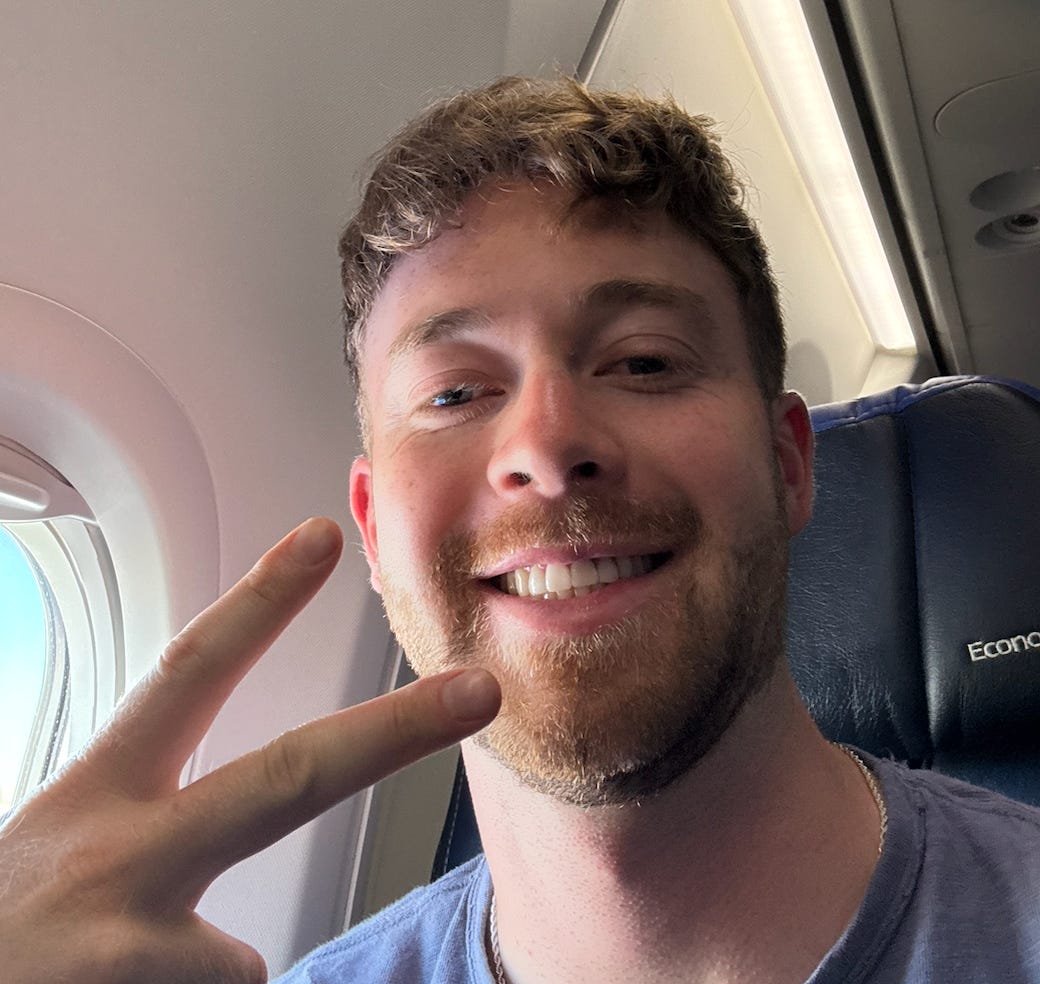
Then I played thirty minutes of suitcase Tetris.
After that, I landed in SF and faced the daunting prospect of hauling five suitcases from baggage claim to Uber pickup. And before the thought of how the f*ck am I getting all of this up three escalators by myself even finished forming, it got replaced by the one you already know.
SURRENDER.
So, from one airport to another, I smiled, laughed, and straight-up cackled. I’m pretty sure a few people clocked me and thought, what is wrong with this man?!
That was three weeks ago. Now I’m laughing from a different public spot: Huntington Park in Lower Nob Hill, where I now, somehow, live.

SF has been great to me. A few observations nobody asked for:
The weather is good but confusing. 65 degrees means either beach weather or arctic tundra, nothing in between. Checking the weather app here is like checking a guy’s height on Hinge… technically information, functionally useless.
I never thought I’d get annoyed hearing strangers talk about AI so much, given that I ran an AI company for two and a half years. But after a year mostly off the grid, I genuinely don’t know what people are saying half the time anymore. And I think I want to keep it that way.
10/10 coffee shops. (Haven’t been to the Corgi Cafe yet tho. Also think I want to keep it that way.)
All jokes aside, I’m just happy to be here, which is a sentence I’m pretty sure I last said out loud at a Northwestern frat party freshman year.
UNHAPPINESS
Exactly one year ago, I was settling into a very different temporary home, in the foothills of Kathmandu, to study Buddhist philosophy… from three Westerners who had themselves discovered Buddhism. The irony was not lost on me. What was lost on me was about ten pounds, thanks to two straight weeks of rice and oatmeal.
I was studying at Kopan Monastery, founded by the great Lama Yeshe, a great Tibetan lama whose writings I love for their directness and bluntness.
Lama Yeshe wrote a lot about happiness. Well, more like unhappiness. And like many Buddhist teachers, he reiterated (re-re-iterated) that attachment and grasping are two excellent ways to stay permanently unhappy.
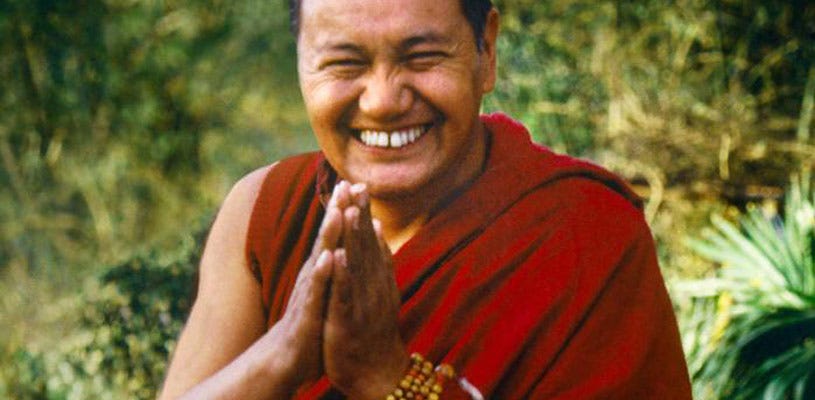
I would know. My attachment to protein and Charmin Ultra Soft was really getting under my skin by day #9 of the retreat.
Of course, he’s totally right.
And I think there’s one specific byproduct of attachment that makes a lot of otherwise healthy, successful, air-conditioned Americans reallyyyy unhappy in the 21st century: resistance. If attachment is wanting life to be a certain way, resistance is what your mind does the second it isn’t.
When we’re attached, our minds go, nope! this (moment, situation, coffee, relationship) should be different, so we try to grab back the steering wheel of control and change whatever it is about life that needs changing.
When I’m walking up a hill in SF, and I start feeling sweat trickle down my back (I go nope! don’t want this. no thank you). When you’re at a party, and someone starts lecturing you about the data center buildout (no thank u!). When you’re at run club, and someone gives you their unprompted life story (nooooo!).
Attachment is us making a deal with ourselves that we’ll only be happy once life looks and feels a certain way, which seems like a terrible deal to me! And resistance is unhappiness in action, IRL.
*Side note: I believe resistance also shows up in the body. My friend Jonny Miller talks about this a lot: resistance can show up as clenching, and he introduced me to this idea from neuroscientist Mike Johnson called “vasomuscular theory of trauma storage”... the gist being that the body holds chronic tension as a kind of stored state, that stress and trauma get locked in through sustained muscular contraction. Whether the theory holds up or not, you can literally feel yourself resisting life.*


I read a fantastic blog post the other day titled, “Surrender as a non-stupid life strategy.” In it, Sasha Chapin writes this:
“Unhappiness is the product of the number of times per minute that you believe circumstances should be otherwise.”
In other words, unhappiness isn’t the number of bad things that have happened to you. It’s the frequency with which you argue with reality. How many times a minute you look at what is and insist it should be something else.
How often you resist.
So the move is simple: DO NOT RESIST. Accept things as they are. Surrender. Unclench.
Should be easy, right? Except we’ve been trained our entire lives to do the exact opposite. Stay in control. Get more control. Never, ever give up control.
We’re told we build the life we want by doing more, gripping harder, pushing further. Literally every successful person in our culture talks about bending reality to their will—we even coined a term for it, the “reality distortion field,” and in many circles in SF that’s a compliment (which, on one level, can be genuinely useful… more on that another time).
And so, not-resisting doesn’t even make it into the stream of consciousness. It’s not on the menu. It’s not even in the restaurant.
SO….
My personal solution to all this attachment + resistance is surrender.
Now, before you close this tab because “surrender” is conjuring yogis with mala bracelets and tattoos preaching “it all happens for a reasonnnn”… bear with me. What I mean is not what you think.
For starters, surrender means wildly different things to different people. Technically it just means “to stop fighting, or hand over control to another person or power,” which could point at almost anything.
So let’s start with the version that’s hard to argue with: surrender, completely, to whatever moment you happen to find yourself in.
This moment is already happening. Like, right now. The one you’re in is the only one there is, and it’s already here. It’s also the only one you’ll ever have. But most of us resist it with everything we’ve got.
We go: nope, don’t like this moment, no thx.
Here’s a dumb, perfect example. You’re on a bus, it’s hot, and the AC is pathetic. You cannot fix the AC. It is not within your power. And yet your mind spends the whole ride (i.e., this timeless moment) going this should be cooler, this should be cooler, this should be cooler.
The AC is the attachment. The suffering is your insistence that this moment be different than it factually is. Being sweaty on a bus isn’t actually that bad, but being at war with being sweaty on a bus is genuinely annoying.
Last week I was neck-deep in 50° water at Alchemy Springs, a bathhouse I live near (tough life, eh?!). Every instinct in my body was screaming to launch out of the plunge and sprint back to the 190° sauna.
But the familiar voice showed up: surrender.
So I stopped fighting the cold. I didn’t stop feeling it… the water was still freezing… that part’s not optional. I just dropped the part of me demanding it be warmer. And weirdly, the longer I stayed, the more I kind of loved it (true SF’er now!).
If “surrender” doesn’t feel like the right word, you can swap in “accept,” “lean into,” “embrace,” or “love.”
What will probably happen is the second you try to surrender, you’ll hit resistance (uhhh, nope, I still don’t like this moment).
Great!
That resistance is also just an experience happening in this moment, which means it’s one more thing to surrender to. So surrender to the resistance. Then to your resistance to the resistance. All the way down until the whole thing runs out of gas :)
TBH, none of this is that controversial. Since you literally, metaphysically, cannot control the moment that’s already happening, you might as well lean into it.
Now the spicy part.
The claim that actually makes people mad, the one I actually came to Huntington Park to make, is bigger: that you can surrender to your whole life the same way you surrender to this moment.
But it’s a very specific kind of surrender, and it looks different depending on who you are and what your life actually entails. Overapply the word, and things go sideways fast.
I met a lot of nomads traveling this past year—Thailand, Costa Rica, the usual spots—who were “trusting the universe” and also, simultaneously, couldn’t make rent or get their life remotely in order (a combination that, in this city, is probably more common than I’d like to think).
That’s not the surrender I’m talking about. The type of surrender I’m advocating for isn’t passive. It’s not giving up, and it’s not handing over your agency. It’s also not giving up all of the beautiful things in life
It’s simply letting go of all our attachments to things so we don’t suffer when things aren’t the way we want them to be. You can keep wanting your life to go great, but you can let go of the grip that says you’ll only be happy if it does.
Surrender is a series of moves, each one deeper than the last. So, as an aspiring internet Lama, lemme break down what I mean.


First, let me introduce you to the patron saint of this idea, Michael Singer, who I stumbled onto exactly three years ago.
Early 70s. Florida. PhD student.
Has a spiritual awakening, wants nothing but to sit alone in the woods and meditate (#relatable).
So he does exactly that, like a real super-duper legit yogi. And then life starts asking things of him. Someone wants him to teach a class. His mind says no. He notices the “no” is just personal preference, so he does it anyway. That yes leads to another yes, which leads to a construction company, which leads to a software company, which goes public and gets acquired for over three billion dollars.
Turns out the yogi-to-billionaire pipeline is, like, kinda strong?
I think the part most people just gloss over with The Surrender Experiment is that Singer wasn’t just waiting around for life to happen. Singer didn’t surrender into nothing and get lucky.
He surrendered into years of spiritual practice, a self so clear and stable that he could drop his own preferences and trust what was left. The surrender only worked because of what he’d built to surrender from. A guy off the street saying yes to everything isn’t Michael Singer… It’s an average night in The Mission.
LET IT GO! Surrender to Happiness with Michael Singer | Tony Robbins Podcast
That’s the whole game. You build something solid and let go from it at the same time, one layer at a time. Which brings us to the layers.
RUNG 1 - SURRENDER THE OUTCOME
The most acceptable version of surrender is letting go of your attachment to how things turn out.
Growing up, I played competitive junior tennis, and for a while I embodied the emotional spirit of John McEnroe without any of the world-class skill or saucy volleys (more of a baseliner, tbh). I could not stand losing. Shocker, right?
I was completely, hopelessly attached to winning. So attached that I used to have actual nightmares about showing up to matches without my racquets, or without shoes (anyone know a good therapist in SF?). I was resisting, with everything I had, the possibility that life might go any way other than the one I’d scripted.
Life won. Life always wins.
Which is where it helps to page in the handsome Stoic influencers for their timely wisdom. Epictetus: “Some things are within our power, and some are not. It is not in our power to make everything turn out as we want — but it is in our power how we respond.” #virality
Last month, I started to get mildly frustrated searching for housing in the worst rental market in US history (yes, actually true). And then, thanks to reading far too much Ryan Holiday in high school (I didn’t go to parties), I surrendered the attachment. Of course I stayed clear on what I wanted—friends, a place, and a neighborhood I loved, parks nearby. But I surrendered the demand.
Three days later, we closed on a beautiful apartment down the street from the park I’m writing this in.
Surrender the outcome.
This is where most thoughtful people, especially in the West, stop. Control the inputs, release the outputs. Do your best and let go of the rest. It’s good advice, and it’s real surrender.
But notice what your hands are still wrapped around. You let go of your attachment to whether it works out. You’re still gripping your attachment to how it happens.
Which is rung two.
RUNG 2 — SURRENDER THE PROCESS (WHILE STILL AIMING).
I have a whole picture of my life here in SF: deep friendships, conscious community, casually frigid cold plunges. And landing back in AI land, there’s been a real temptation to dictate exactly how all of that is going to materialize.
Go to these events. Join these run clubs. Hit these parties. And then the outcome I so maturely surrendered will surely arrive, on schedule, per the plan.
Which is, of course, just the same control freak wearing a slightly more spiritual outfit. I may have dropped my attachment to whether it works, but I’m still gripping how it happens.
Because my plan was never that smart to begin with. My Apple Notes of the “right” run clubs and the “correct” parties are just my little mind’s best guess, and my little mind has been wrong about approximately everything.
So I’ve stopped gripping the route and started following my internal pull instead. On day nine in SF, I was at a Shabbat event (see, Mom, I still Jew!) that was getting more awkward by the minute (fine, yes, I was one of the awkward ones). Every cell in my body was saying, let’s get the f*ck out of here.
I stayed. I surrendered to the process.
Five minutes later I met someone cool, we escaped the small-talk bloodbath together, and grabbed a great, wildly overpriced meal in the Marina.
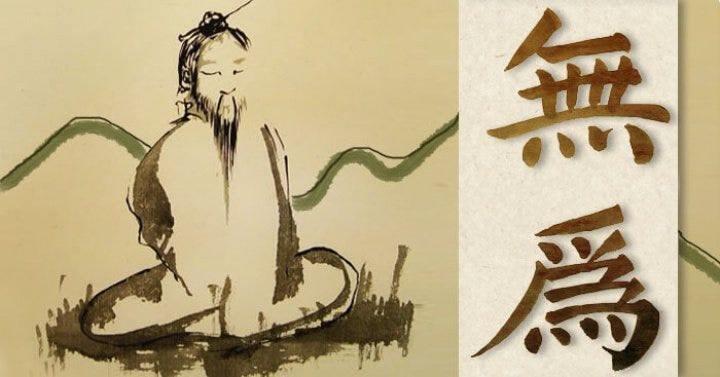
This is wu wei (無爲), the Taoist idea usually translated as “effortless action.” It does not mean laziness or doing nothing. It means moving with the current instead of forcing your will onto the world. You follow the pull, not the plan. (And it doesn’t mean you toss out planning altogether… please still plan to get to the airport on time so your Mama doesn’t get mad at you..)
But—and you damn well knew there was a but coming—even here, I was still gripping something. I’d gotten quietly proud of how go-with-the-flow I’d become. Narrating my own spontaneity like I was Sir David Attenborough, the GOAT himself. And here we observe the surrendered man, flowing freely through his natural habitat.
The plan was gone, but I was still there, managing the surrender, grading my own vibe. Turns out the last and heaviest thing you carry everywhere you go is... you.
Which is the attachment underneath all the others. And it’s rung three.
RUNG 3 — SURRENDER THE SURRENDERER
Okay. Deep breath. This is where it gets a little weird.
If rung one is dropping attachment to outcome, and rung two is dropping attachment to plan, rung three is dropping attachment to the dropper. Dropping the attachment to… YOU.
Because notice: at every level so far, there was still a guy back there running the show. Surrendering the moment, the outcome, the process, and the whole time some little CEO in your head is going “great job surrendering, buddy, really nailing it!” And at some point, in a sweaty Nepalese monastery with no phone for two weeks, Lama Yeshe (his spirit, anyway) corners you with an annoying question.
Who is this I that keeps showing up to surrender things?
Rung 3 is loosening your grip on the “I”.
We’re more attached to the idea of ourselves than to anything else, and for good reason: this little character we’ve built has helped us survive and make sense of the world. But it’s also the source of our suffering.
Someone criticizes us at work, we suffer. Someone says we’re having a bad hair day, we suffer. Someone informs us that men are less evolved than women because we sleep with only one pillow, we suffer (this happened to me, and, TBH, very valid).
Attachment to self is: I won’t be okay until something is true about me.
Which is also a genuinely terrible deal, because good hair days show up maybe twice a year and get ruined by the wind in this city anyway.
Now, let me get this out of the way, because I’m wading into deep water. Free will, the nature of the self, whether “you” exist the way you assume you do. Lama Yeshe and about a thousand other sages have written entire libraries on this, and I’m not trying to start a monastery-wide clapback debate in a Substack I wrote in a park.
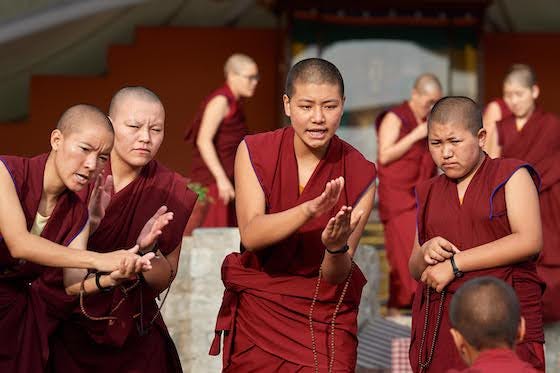
But you don’t have to believe the self is an illusion for any of this to be useful. Skip the metaphysics entirely. Whether there’s “really” a you, whether you “really” have free will or control, doesn’t matter here. Because your attachment to being that “I” does the exact same thing every other attachment does. It makes you suffer the second reality stops looking the way you want it to.
We can release this attachment, but it doesn’t happen overnight, and you can’t learn it in one article.
OK, I can feel you drifting. Let’s bring in an example everyone knows.
You know Neo from The Matrix.
In the whole movie, he’s fighting hard. Like, HARD. Dodging, straining, trying to out-muscle the thing. This method half-works, but it costs him everything he’s got, and then he dies in a hallway.
Like genuinely flatlines as I felt would happen to me walking from English to science class in high school.
Then Neo gets up, is tasked with fighting the same Agent(s), except this time he raises one hand and stops the bullets midair without really looking, almost bored, and sees the whole world as the code it’s made of.
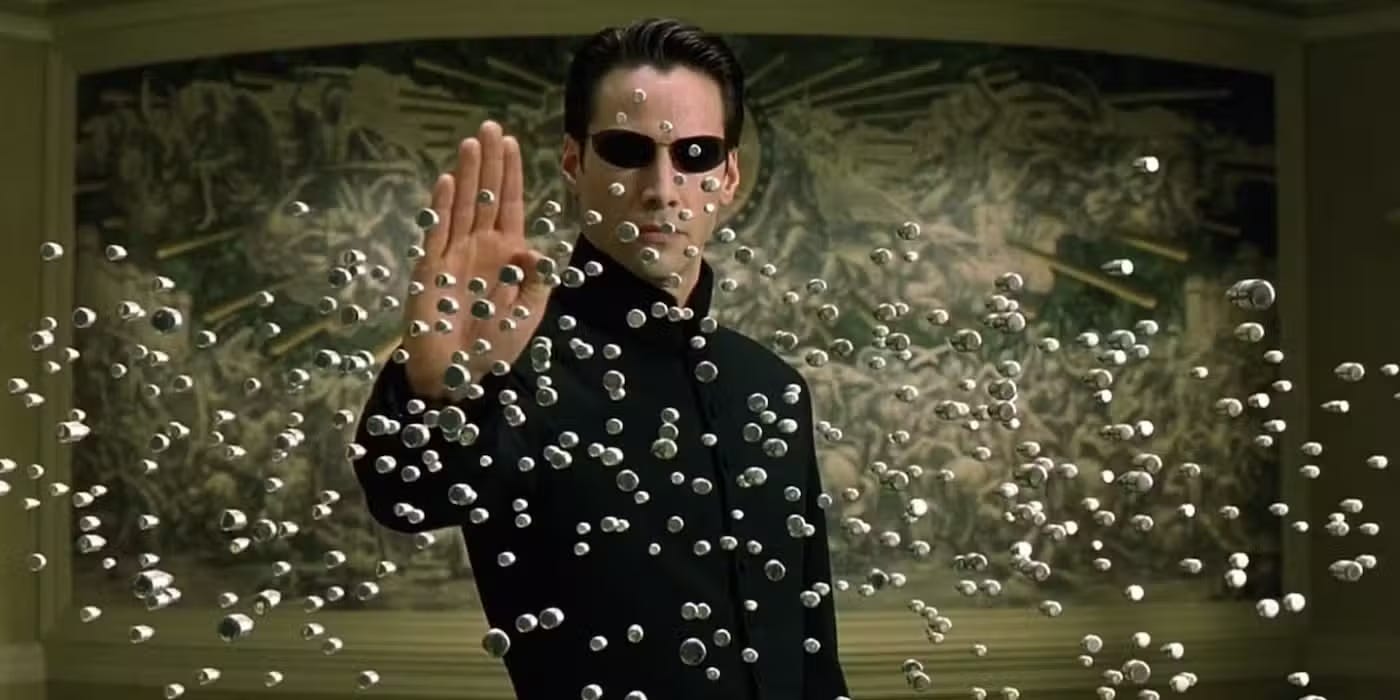
He wins.
And he didn’t win by trying harder, by being more in control of his destiny. He won by stopping by dropping the version of himself that was fighting and letting something move through him that was there the whole time.
(He also gained the ability to stop bullets and fly. I surrendered and found a decent lease in (s)nob hill. Same principle, slightly different budget. I’m working up to the flying.)
WHAT ACTUALLY HAPPENS WHEN YOU SURRENDER
Here’s the part where I most risk sounding like a guy selling crystals out of a van. As a reminder, I’m trying to balance what’s personally true, metaphysically true, and practically true without tipping into woo-woo mysticism. There are enough TikTok influencers for that!
When you surrender, everything in life starts to look like it’s happening for you.
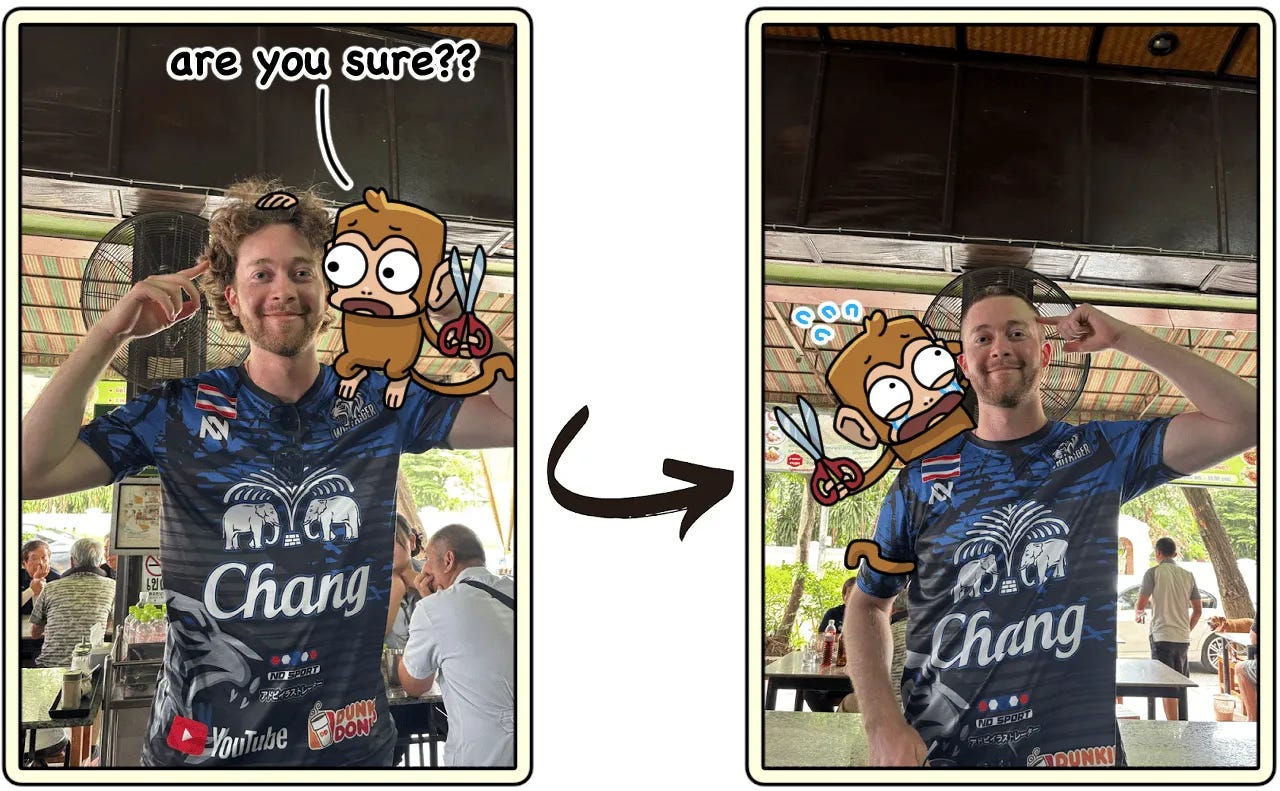
Last Friday morning, I reluctantly woke up at 6am for SF’s wildly popular Salty Dogs Club SF and jumped into the freezing Bay with a bunch of crazy strangers.
I can’t tell you how many times I nearly resisted. The 6am alarm clock (I’m a night owl). The moment of arriving and not knowing anyone. The frigid water soaking into my bones for twenty minutes.
Every time I felt resistance, or clenching, I surrendered. I leaned in. However you want to describe it. I let the whole thing be okay even if it ended right there with me meeting nobody. And as it happened, mid-plunge, I met a few great lads that I have a feeling might turn into very solid friends one day.

And this doesn’t sound like surrender, does it?! And that’s because surrender is not giving up; it’s not avoiding the 6am cold plunge to protect your comfort. It’s intentional, it’s agentic, and it’s leaning IN.
Now, I’m not saying surrender magically makes your life work out. Please do not walk away thinking “Noah said to surrender and then all my problems disappeared.”
But I do think that surrender widens your surface area for luck… that it makes you feel like things are kinda working out the way they should. And you definitely get more moments that feel like the universe dropping something into your lap.
Joseph Campbell said, follow your bliss, and doors open where you didn’t even know there were walls. Carl Jung called it synchronicity, and he was careful to call it an acausal connecting principle. The coincidence carries real meaning, and you can honor the feeling that life is arranging itself for you without claiming anything supernatural.
I don’t think the universe is rearranging itself for me. I think I stopped rearranging myself against it, and finally started noticing what was already there.
ONE BIG CAVEAT, BECAUSE I’D BE A FRAUD WITHOUT IT
Surrender, if misinterpreted, can rot into an excuse.
It’s shockingly easy to take “I’m just surrendering to what is” and use it to dodge real work. To skip the hard conversation. This is spiritual bypassing, or slapping an Instagram quote over a problem you don’t want to look at.
I’ve got a personal version of this: I tend to manufacture doubt the moment something real and vulnerable shows up—a person, an opportunity, a feeling—and then call it “trusting my gut.” It is not my gut, and it is not surrender. It’s fear.
Real surrender does not get you out of the work. You surrender to this moment as it is, and then you stand up and do the thing the next moment is actually asking of you.
SO, ABOUT HOW I’M WRITING THIS
Roughly every month since graduating high school, I’ve done this priming meditation by Tony Robbins. In the meditation, he says, “What if life was always happening for you and not to you… It looks like it’s happening to you, but it’s all happening for you.”
Once someone internalizes this, I believe something may permanently shift in how they deal with the hard sh*t in life, namely, that every struggle, no matter how hard or real, begins to look less like something to escape and more like it’s carrying some purpose that you can’t understand yet. Or, put less woo-woo-y, that meaning can be created from every hardship.
I have a confession to make. I abandoned this piece for a month and thought it was crap. I hated the writing. These 5,000 words sat in a Google Chrome tab, mocking me.
And I’m finishing it now, today, because I am stuck at home with a violent sickness. Some gift I picked up on the flight back from Barcelona last Sunday, courtesy of a stranger I will resent for the rest of my life. I’ve been stuck at home all day with zero energy, annoyed that I couldn’t do any of the things I’d planned (#attachment).
Which means, for the first time in a month, I had nothing but time and stillness to actually sit with this thing and finish it.
Is that the universe putting me exactly where I needed to be? Grounding the restless lad long enough to make him write this essay about surrender?
Maybe.
As I type this, I’m on the floor. Actually on the floor, shaking, in real pain, the not-bliss kind. And in the middle of it, right on cue, the little voice shows up again: surrender.
So I do.
And what’s left, once I stop fighting it, is just… pain. Physical pain, moving through me, as me, for me. And the narrator in my head, the guy who usually has so much to say about how things should be going, goes quiet.
There’s just this.
SO, IF YOU FORGET EVERYTHING ELSE
I just threw an absurd amount at you—Stoics and Taoists and Neo and waves and Jung and a guy shaking on his floor—and I’d bet some of it slid right past you. That’s fine.
For the most part, you’re never fully existing permanently in one rung of surrender. You may be great at living in the present moment, but you’re still tied to outcomes. You may be great at surrendering outcomes, but still be attached to your ego.
To use Ken Wilber’s frameworks, surrender is both a state you can glimpse and a stage you slowly grow into. It’s a state in that, at any moment, you can surrender in any of the ways I’ve described. But that surrender is temporary.
The whole game is learning to stabilize the glimpses. Visit the deeper rungs a little more often, and stay a little longer.
I was teaching a yoga class to some friends in Lafayette Park the other day, and I built the class around one idea: trust.
So maybe trust is the actual takeaway. Forget “surrender” if it’s too woo, too yogi-with-a-mandala, too much. Here’s the whole essay in one sentence, no incense required:
What if every time you felt attached to something, you trusted that things were working out more or less as they should?
That’s it.
A QUOTE TO LEAVE YA WITH
“Have patience with everything unresolved in your heart and try to love the questions themselves as if they were locked rooms or books written in a very foreign language. Don’t search for the answers, which could not be given to you now, because you would not be able to live them. And the point is to live everything. Live the questions now. Perhaps then, someday far in the future, you will gradually, without even noticing it, live your way into the answer.”
— Rainer Maria Rilke, Letters to a Young Poet
P.S. If you’re in SF and want to grab coffee, let me know. Always looking to meet more cool, silly people.
P.P.S. If you disagree with this whole thing, also let me know. I love a new perspective, and I love being told where I’m off.
A FEW QUESTIONS I IMAGINE YOU’RE ASKING
(Because I asked them too.)
1. Aren’t some attachments good? I should be attached to my family, my career, right? If I weren’t attached, I wouldn’t care.
I get why it feels that way, but no, you can care incredibly deeply without attachment. In fact, you can care more deeply, because you’re not coming from a place of lack; you’re coming from a place of abundance.
Yes, sometimes it’s hard to drop the attachment completely. You might always be attached to your kids being safe. But notice how much unnecessary resistance your head generates around that. You can be committed to your kid’s safety without spending the entire bus ride home picturing a car crash. The love is real. The mental gymnastics on top of it aren’t doing anything except making you suffer.
You keep the care. You drop the grip. And the care gets cleaner when you drop the attachment because it’s no longer tangled up with fear and control. You show up for the people and the work you love because you love them, not because you’re terrified of what happens if you lose them.
2. Okay, but how do you actually get rid of attachment?
Great question, and honestly I didn’t have room to do it justice in this article (there’s a lot more here). The simplest thing I can offer: notice when you’re resisting. Resistance points straight at attachment. When you catch yourself going nope, this shouldn’t be happening, pause and ask what you’re actually gripping in that moment.
Then work the ladder of words. Start with accept. Then surrender. Then lean into. And eventually, if you can get there, love. Same moment, escalating degrees of letting go.
3. I’m super ambitious. I can’t achieve the things I’m going to achieve without being in control.
This is the big one, especially for the founder-brained people reading this (hi, it’s me).
First, we don’t have to argue about whether you metaphysically have control, or whether free will is real. That’s a whole other conversation. Here’s the practical point: you can act with enormous agency, diligence, and organization without being attached to control, the process, the outcome, or the version of you that thinks it’s holding the wheel.
You can still run the meeting brilliantly. Still have your life in order, hit the deadline, close the round. You just don’t have to be angry or hurt when it doesn’t go the way you wanted. Now, the fear underneath this question is usually that if I let go, I’ll get lazy. I’ll lose my edge. I promise you won’t. Letting go of the attachment doesn’t touch the drive. What changes is where the ambition is coming from.
The most surrendered people I know are still wildly ambitious… it just looks different. It’s steadier and healthier, like the kale smoothie I just downed. It’s not the frantic, prove-myself, if-this-fails-I’m-nothing kind of ambition. One practical thing I’d actually recommend: notice when you’re grasping. There’s a physical version of it (the clench in the jaw, the shoulders, the held breath). When you catch it, just ease up. Soften the body a little. You’ll be surprised how often the grip in your mind loosens the second the grip in your body does.
4. I still don’t get “surrender the I.” Isn’t there always a me moving through life? If I don’t protect the me, won’t I be in trouble?
No. You can surrender the attachment to the “I,” and you’ll be fine. Better than fine, actually.
This is a much bigger conversation than I can finish here, but the short version: there’s actually nothing to protect. There’s no permanent, solid self sitting in there the way you think there is. So when someone says “I don’t like your hair,” you can turn around and look for the person that’s getting offended. Who exactly is upset? Go find that person.
These are practices, and the thing you discover is that the person you’re defending doesn’t exist in the way you assumed. To be clear, this isn’t dropping you—you still exist in the everyday, relative sense. You still have a name and a life. It’s dropping the ultimate you, the solid permanent one you think you’re protecting, which was never actually there to begin with.
5. How does surrendering to the moment relate to being present?
Deeply related. Surrendering to this moment is basically a side door into being present. Because most of the time, when we’re not present, it’s because we’re resisting. We’re distracted, lost in thought, replaying the past or auditioning the future. We’re physically here but mentally everywhere else, and the engine underneath it all is resistance to what’s actually happening right now.
Being present just means paying attention to whatever moment you happen to be in. And surrendering to the fact that you’re already here—you literally can’t be anywhere else—is one of the fastest ways to drop back into it. When you’re sweaty and miserable on that bus, every part of you wants out of the present moment. But there’s still a way to find some comfort, even beauty, in it. That’s exactly where surrendering, leaning in, loving, reorienting toward the moment instead of away from it, actually becomes useful.
Okayyyy now we’re actually done. Go surrender ya salty dogs :)